Note: A portion of this article was published in the September 2025 NCAS Newsletter
by Dr. Mabel Aworh
From Family Roots to Computational Biology
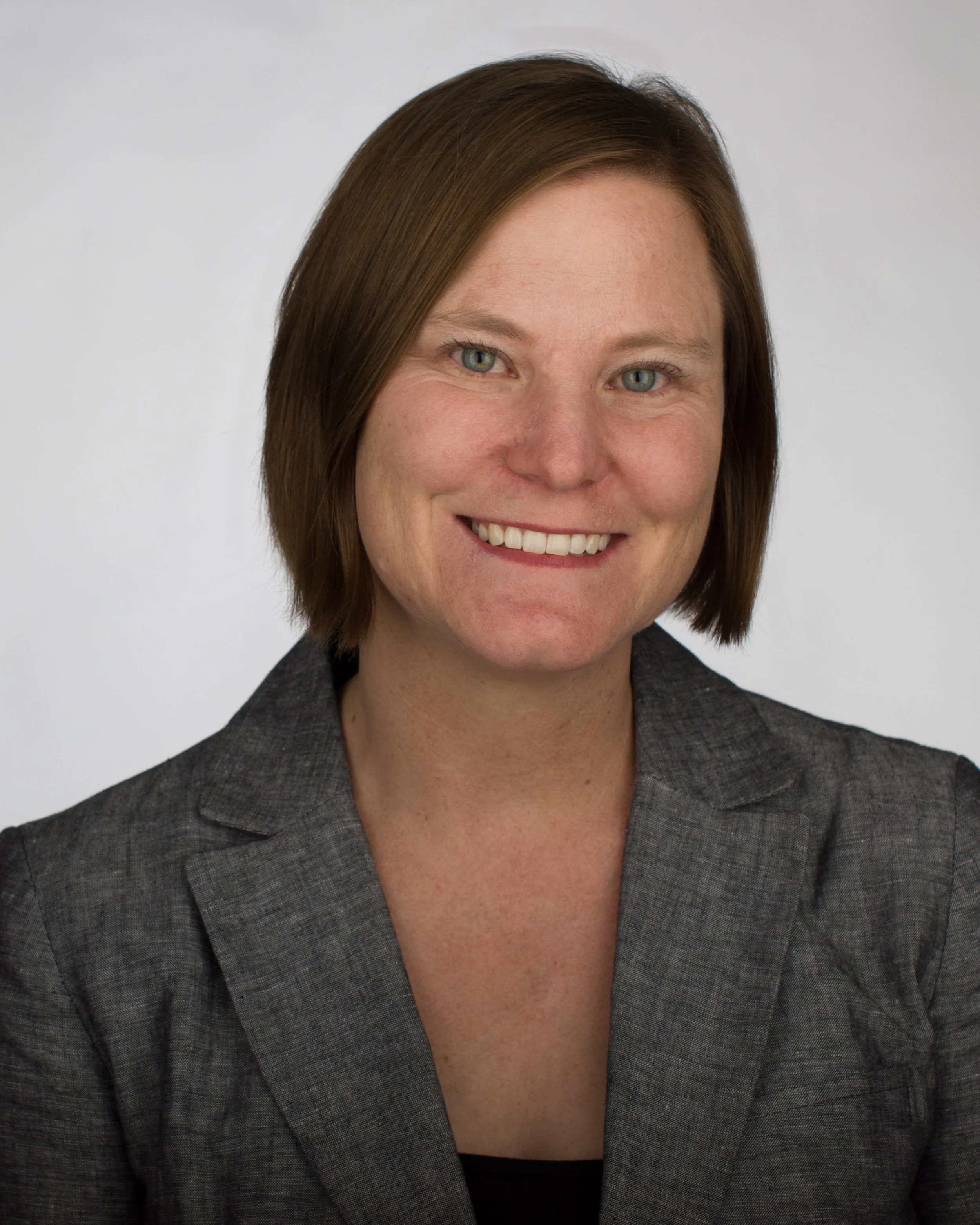
For Dr. Bonnie Hurwitz, science has been part of her life for as long as she can remember. Growing up in a family of scientists, she was surrounded by curiosity, discovery, and a strong tradition of women pursuing careers in science. Her grandmother was a biophysicist and among the first six women to earn an engineering degree in 1938, while her mother holds a Ph.D. in ecology. Her grandfather was a physicist who worked on the space program and contributed to the development of the lunar rover.
Despite these strong scientific influences, Dr. Hurwitz initially tried to chart a different course. As an undergraduate at the University of California, Santa Cruz, she considered majoring in English literature because of her love of writing and communication. But her enjoyment of organic chemistry and calculus eventually convinced her that science might be the better fit. She earned a degree in biochemistry and molecular biology.
Her first experience in laboratory research, however, revealed something unexpected: she was not particularly suited to bench science. Instead, she discovered computational biology through programming.
“I found the world of computational biology by taking a programming class,” Dr. Hurwitz recalled. “It was just a really natural fit for me. And I love programming.”
That discovery launched a career that would eventually span industry, academia, genomics, bioinformatics, high-performance computing, cloud computing, and artificial intelligence.
Discovering a New Field
After earning her undergraduate degree, Dr. Hurwitz spent approximately 12 years working in industry, where she held positions with organizations including Insight Genomics, Accelerus, Third Wave Technologies, and Cold Spring Harbor Laboratory. During this period, she worked in genomics at a time when bioinformatics was still an emerging field.
Eventually, like her mother and grandmother, Dr. Hurwitz returned to academia to pursue her Ph.D. and later joined North Carolina State University, where she now works at the intersection of computational biology, high-performance computing, cloud computing, and AI.
Her entry into bioinformatics was somewhat unconventional. When she began working in the field roughly 25 years ago, formal degree programs in bioinformatics were still uncommon. At the same time, NC State was establishing itself as a leader in the emerging discipline through the Bioinformatics Research Center.
“I loved computing and I loved biology, but I didn't want to be in the lab,” Dr. Hurwitz explained. “And as it so happens, there was demand for that and really no one who was trained in those areas.”
That combination of curiosity, computing, and biology ultimately became the foundation of her career.
Seeing the Invisible World
Today, Dr. Hurwitz leads a computational biology research program focused on understanding complex microbial communities through large-scale biological data. Her research brings together omics, high-performance computing, cloud computing, and machine learning to study microbes and viruses that have remained largely invisible to traditional laboratory approaches.
Her team investigates questions about how viruses interact with and reshape their microbial hosts and how these interactions influence ecosystems ranging from the oceans to human health. A major attraction of this work is the opportunity to discover organisms and biological interactions that have never previously been observed.
“We're the first to maybe see and understand some of these novel viruses,” Dr. Hurwitz said.
Modern sequencing technologies make it possible to study organisms directly from environmental samples, including organisms that cannot be cultured in the laboratory. This opens an entirely new window into microbial ecosystems and allows researchers to investigate how organisms interact and why those interactions matter.
Her research has explored environments ranging from ocean ecosystems to lichens and plant-associated communities. Across these systems, the central goal remains the same: using computational approaches to uncover the hidden biology within complex microbial communities.
Making Bioinformatics More Accessible
Research is only one part of Dr. Hurwitz’s work. She is equally passionate about developing tools and infrastructure that allow more scientists to take advantage of computational biology. Over the course of her career, she has helped develop resources including iMicrobe, Planet Microbe, and iVirus. These platforms are designed to lower the barriers that often prevent biologists from using sophisticated computational resources.
At NC State, Dr Hurwitz is also working through the Bioinformatics Research Center in collaboration with the Office of Information Technology and university libraries to make bioinformatics software more accessible on the university's computing infrastructure.
Rather than requiring researchers to install and configure complex software themselves, tools can be made available through the university's computing environment. Her team is also developing workflows and pipelines that allow researchers to conduct analyses ranging from RNA sequencing to metagenome-assembled genome reconstruction.
Beyond NC State, community resources connect researchers to national computing infrastructures, allowing scientists to analyze their data without needing to build their own computational systems. The philosophy behind this work is straightforward: powerful computational tools should not be limited to scientists who have extensive programming or computing backgrounds.
Training Scientists for the Next Generation
As a leader in bioinformatics education and infrastructure, Dr. Hurwitz sees training as an essential part of her mission.
Many students’ entering biology, genetics, or computer science programs do not necessarily receive extensive training in high-performance computing, cloud architectures, AI-ready data, or data interoperability. Dr. Hurwitz and her colleagues work to help fill those gaps.
“We're really trying to play a role in just helping our students get ready for the industry,” she explained.
Her goal is not simply to teach students how to produce data, but how to develop data that can be shared, extended, and integrated with other datasets.
Her experience in industry strongly influences her approach to mentorship. After more than a decade working outside academia, including research experiences with Amazon and Hewlett Packard, Dr. Hurwitz returned to academia because she wanted to teach and mentor the next generation of scientists. For her, mentorship means connecting scientific knowledge to real-world applications.
“How can we actually use our science to extend our world and make a better world?” she asks.
That emphasis on application is also what drives her interest in interdisciplinary research. Bringing biology, computer science, data science, and other fields together can create new approaches, products, and solutions to problems that cannot be addressed from a single discipline.
AI and the Future of Science
For Dr. Hurwitz, one of the most significant developments transforming computational biology is artificial intelligence (AI).
“AI has rocked our world,” she said. “And there's no going back.”
She sees enormous potential for AI to accelerate scientific discovery, particularly by automating repetitive tasks that can consume large amounts of researchers' time. In bioinformatics, for example, evaluating different software tools, parameters, and analytical approaches can take researchers months or even years.
AI can help scientists navigate some of these routine tasks more efficiently, allowing researchers to spend more time interpreting results and asking scientific questions.
But Dr. Hurwitz also emphasizes that AI should complement and not replace scientific expertise.
“You have to really consider honing your skills first and then applying it,” she cautioned.
Her own experience has reinforced this perspective. She recently used AI to revisit computational pipelines she had developed years earlier and was surprised by how much faster and more effectively she could improve them.
For students and scientists entering the field, her advice is clear: learn AI, understand how it works, and learn how to use it responsibly within your area of expertise.
A Scientist Who Finds Inspiration Outdoors
Outside the laboratory and computing environment, Dr. Hurwitz finds inspiration in physical activity and the natural world. She is an avid cyclist and weightlifter and can often be found at the NC State gym early in the morning. Much of her training is motivated by her love of mountain biking and spending time outdoors with her family.
She especially enjoys mountain biking with her 20-year-old son, a pursuit that requires her to keep training if she hopes to keep up with him.
For Dr. Hurwitz, science and life are ultimately connected by the same sense of curiosity. Whether she is exploring microbial communities through computational analysis or exploring nature with her family, she remains motivated by a desire to understand the world around her.
Looking Ahead
As computational biology continues to evolve, Dr. Hurwitz sees an increasingly interconnected future in which biology, computing, AI, and high-performance infrastructure work together to answer questions that were previously impossible to approach.
Her journey from growing up in a family of scientists, to initially resisting a scientific career, to discovering programming and eventually becoming a leader in computational biology illustrates how scientific careers can develop in unexpected ways.
Her message to scientists and students is simple: embrace new technologies, build strong foundational skills, and use those tools to solve meaningful problems.
“Everybody needs to learn AI and how to use it best in their world to improve what they're doing,” Hurwitz said.
For a scientist whose career has been shaped by curiosity, adaptability, and a willingness to explore emerging fields, that message may be the most fitting reflection of her own journey.